
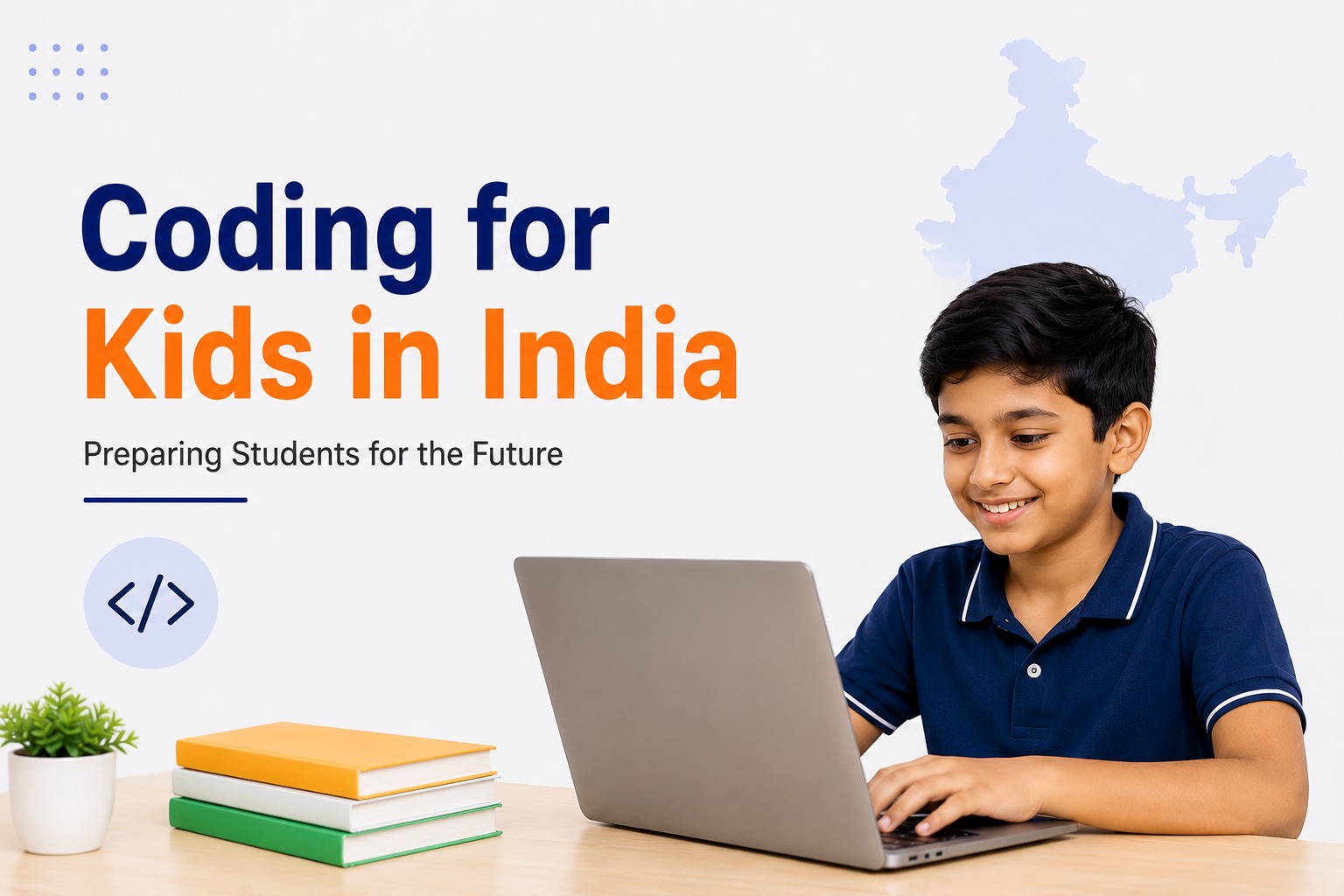
The Growing Importance of Coding Education for Indian School Students
India is rapidly emerging as a global technology hub. With advancements in Artificial Intelligence, software development, robotics, and digital transformation, the demand for technology skills is growing faster than ever before.
In this changing world, coding is no longer a skill reserved for software engineers. It has become an important learning tool that helps students develop problem-solving abilities, logical thinking, creativity, and confidence.
As a result, coding education is gaining significant importance among Indian school students.
Why Coding Matters Today
Technology influences almost every aspect of modern life. From smartphones and websites to online learning platforms and digital payments, software powers the world around us.
Learning coding helps students understand how technology works rather than simply using it.
Coding teaches children to:
- Think logically
- Solve problems systematically
- Build creative solutions
- Develop confidence
- Understand digital technologies
These skills are useful regardless of the career path they choose.
India's Growing Focus on Coding Education
Many schools and educational institutions across India are introducing coding programs at an early age.
The National Education Policy (NEP) has also encouraged the development of computational thinking and digital literacy among students.
This shift reflects the growing recognition that technology skills are becoming essential for future success.
Benefits of Coding for Indian Students
Enhances Problem-Solving Skills
Coding encourages students to analyze problems and find solutions step by step.
Builds Logical Thinking
Programming helps children understand patterns, sequences, and logical reasoning.
Encourages Creativity
Students can create games, websites, apps, and digital projects using coding.
Boosts Confidence
Completing coding projects gives children a sense of achievement and motivates them to continue learning.
Develops Future-Ready Skills
Coding introduces students to emerging technologies such as:
- Artificial Intelligence
- Machine Learning
- Robotics
- Data Science
- Automation
Coding and Career Opportunities
Technology careers are among the fastest-growing professions globally.
Students who learn coding early may explore careers such as:
- Software Developer
- AI Engineer
- Data Scientist
- Robotics Engineer
- Cybersecurity Specialist
- Game Developer
- Web Developer
Even students pursuing non-technical careers benefit from coding because it strengthens analytical and problem-solving skills.
What Can Kids Build Through Coding?
Children can create:
- Games
- Mobile Apps
- Websites
- Animations
- AI Projects
- Robotics Applications
- Educational Tools
Project-based learning keeps students engaged while helping them apply their knowledge in practical ways.
How Parents Can Support Coding Education
Parents play an important role in encouraging technology learning.
They can:
- Introduce coding at an early age
- Encourage creativity and experimentation
- Celebrate project achievements
- Support regular practice
- Provide access to coding resources and classes
Positive encouragement often leads to greater confidence and interest in technology.
The Future of Coding Education in India
As India continues to advance in technology and innovation, coding will become an increasingly valuable skill.
Future workplaces will require individuals who can think critically, solve complex problems, and work effectively with technology.
Students who develop these skills today will be better prepared for tomorrow's opportunities.
Conclusion
Coding education is becoming an important part of modern learning for Indian school students. Beyond programming, coding develops creativity, confidence, problem-solving abilities, and logical thinking.
By learning coding early, students gain valuable skills that help them succeed in academics, future careers, and an increasingly digital world.
Investing in coding education today is an investment in the innovators, creators, and leaders of tomorrow.