
Machine Learning for Kids: Understanding How AI Learns
Artificial Intelligence is transforming the way we live, work, and learn. One of the most exciting parts of AI is Machine Learning, a technology that allows computers to learn from data and improve over time without being specifically programmed for every task.
For children, understanding machine learning is a great way to explore how modern technology works. From video recommendations to voice assistants, machine learning is behind many of the tools kids use every day.
What is Machine Learning?
Machine Learning is a branch of Artificial Intelligence that enables computers to learn patterns from data and make decisions based on what they have learned.
Just like humans learn through experience, machine learning systems learn by analyzing examples and identifying patterns.
For example:
- A child learns to recognize dogs by seeing many different dogs.
- A machine learning system learns to recognize dogs by analyzing thousands of dog images.
The more examples it sees, the better it becomes at recognizing them.
How Does Machine Learning Work?
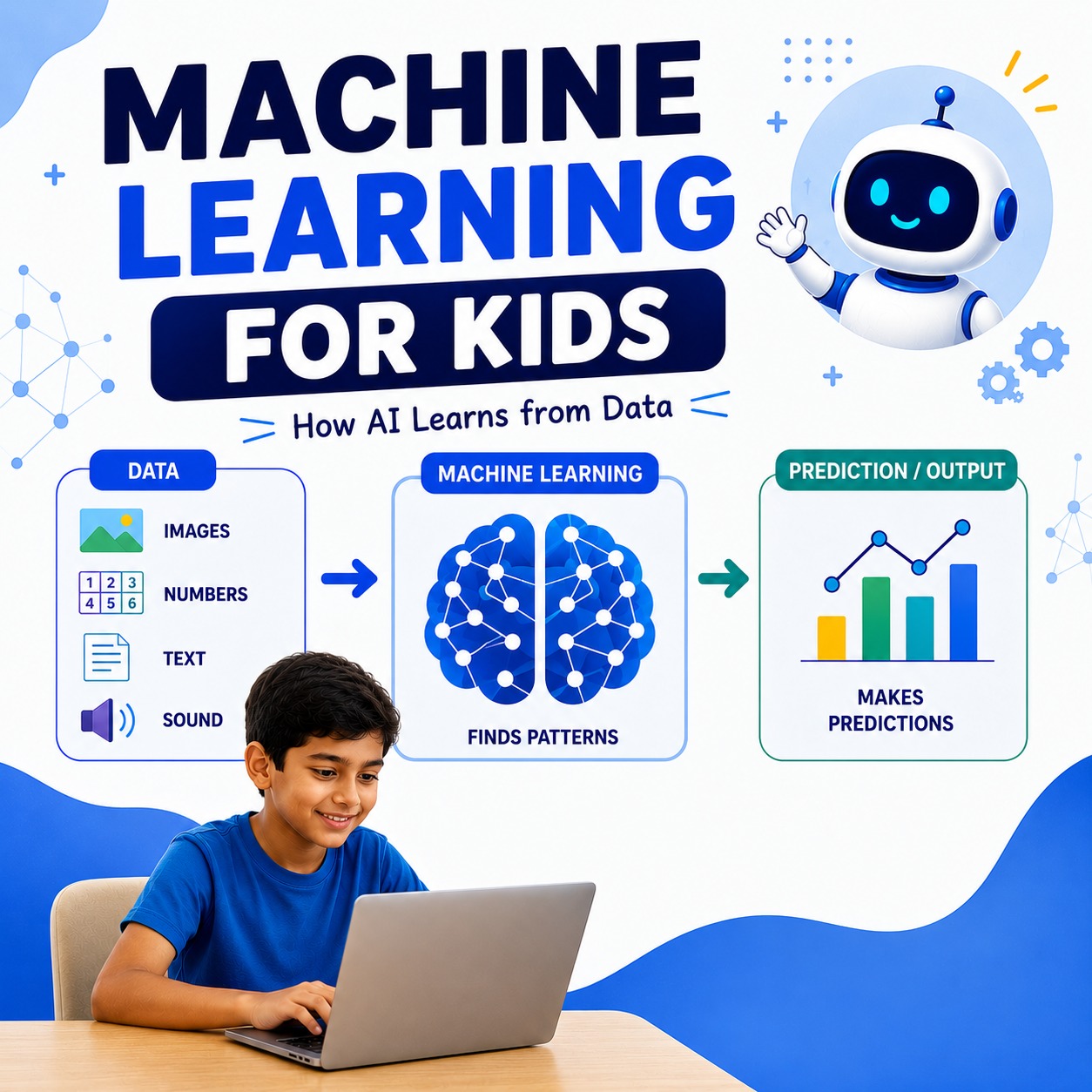
Machine learning follows three simple steps:
Step 1: Collect Data
The AI receives information or examples.
Examples include:
- Photos
- Videos
- Text
- Numbers
- Audio recordings
Step 2: Find Patterns
The AI analyzes the data and looks for patterns.
For example, if it sees thousands of cat photos, it learns common features such as:
- Pointed ears
- Whiskers
- Fur
- Eye shapes
Step 3: Make Predictions
Once the AI learns enough patterns, it can make predictions when it encounters new information.
For example, it can determine whether a new image contains a cat or not.
Real-Life Examples of Machine Learning
Children interact with machine learning every day.
YouTube Recommendations
Machine learning analyzes what videos people watch and suggests similar content.
Voice Assistants
Virtual assistants understand speech and answer questions using machine learning models.
Online Games
Many games use AI to adjust challenges and improve player experiences.
Translation Apps
Machine learning helps translate languages quickly and accurately.
Smart Cameras
Modern cameras use AI to recognize faces and improve photo quality.
Why Should Kids Learn Machine Learning?
Encourages Curiosity
Children naturally wonder how technology works. Learning machine learning helps answer those questions.
Builds Problem-Solving Skills
Machine learning teaches kids to analyze information and think logically.
Develops Future Skills
AI and machine learning are becoming important in many careers.
Makes Learning Fun
Children enjoy exploring how computers learn and make decisions.
Is Machine Learning Difficult for Kids?
Not at all.
Children do not need advanced mathematics to begin understanding machine learning concepts.
They can start by learning:
- What data is
- How patterns work
- How predictions are made
- How AI systems learn
Many educational tools now make machine learning interactive and easy to understand.
Fun Machine Learning Activities for Kids
Kids can explore machine learning through simple projects:
Image Recognition
Train an AI model to recognize different objects.
Emoji Classifier
Teach AI to identify happy, sad, or excited expressions.
Voice Recognition
Explore how AI understands spoken words.
Pattern Prediction Games
Learn how computers predict outcomes using data.
These activities make learning enjoyable while introducing important AI concepts.
Machine Learning and Future Careers
Machine learning is creating exciting career opportunities, including:
- AI Engineer
- Data Scientist
- Robotics Engineer
- Software Developer
- Healthcare Technology Specialist
- AI Researcher
Understanding machine learning today can help children prepare for tomorrow's opportunities.
How SmartTech Junior Introduces Machine Learning to Kids
At SmartTech Junior, children learn machine learning through engaging projects, real-world examples, and hands-on activities.
Students explore:
- AI fundamentals
- Data and patterns
- Machine learning concepts
- Creative AI projects
- Problem-solving challenges
The goal is to make AI accessible, exciting, and practical for young learners.
Conclusion
Machine learning is one of the most important technologies shaping our future. By helping computers learn from data, it powers many of the smart tools we use every day.
When children understand how machine learning works, they gain valuable knowledge about the technology around them and develop future-ready skills that will benefit them for years to come.
Learning machine learning today is not just about technology—it's about preparing young minds to become tomorrow's innovators and problem-solvers